
Jakub's Fate from Starving Giant to Block 11 Enforcer
The Tattooist of AuschwitzThis character-destiny thread follows Jakub's transformation from a starving American in the tattoo line to the man forced to torture Lale Sokolov.
increasing Bearing strength in each event
 decreasing
Bearing strength in each eventdecreasingHungry Giant at the Tattoo Table

Hungry Giant at the Tattoo Table
A giant of a man stands before Lale Sokolov and whispers that he is very hungry. Lale tattoos his number and then hides him in the shadows behind the workstation.
A Feast in the Darkness
When the SS are gone, Lale brings Jakub to his room and feeds him bread and sausage. Jakub says he is an American who was visiting family in Poland when the war trapped him.
The Debt of Kindness
Jakub's size is a weapon, but his hunger is human. Lale has no idea how fiercely that debt will one day return to him.
Strongman Performance
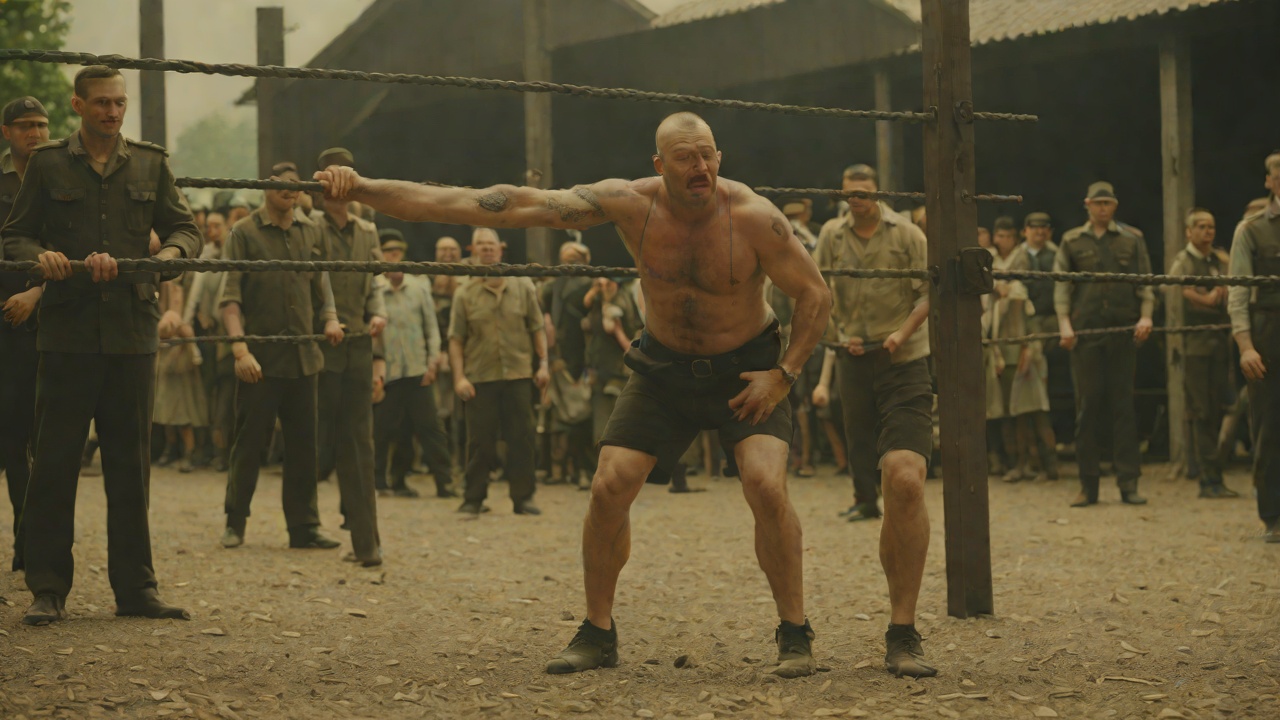
Strongman Performance
Jakub entertains prisoners and SS alike by bending metal rods and tossing wooden beams. Oberscharführer Houstek watches and nods.
A New Purpose
Houstek recognizes that the giant's strength can be used. Jakub is taken away to serve the camp administration.
From Prisoner to Functionary
Lale sees a path that he himself has taken: survival through usefulness. The difference is that Jakub's usefulness will soon be measured in pain.
Appointed Block 11 Enforcer
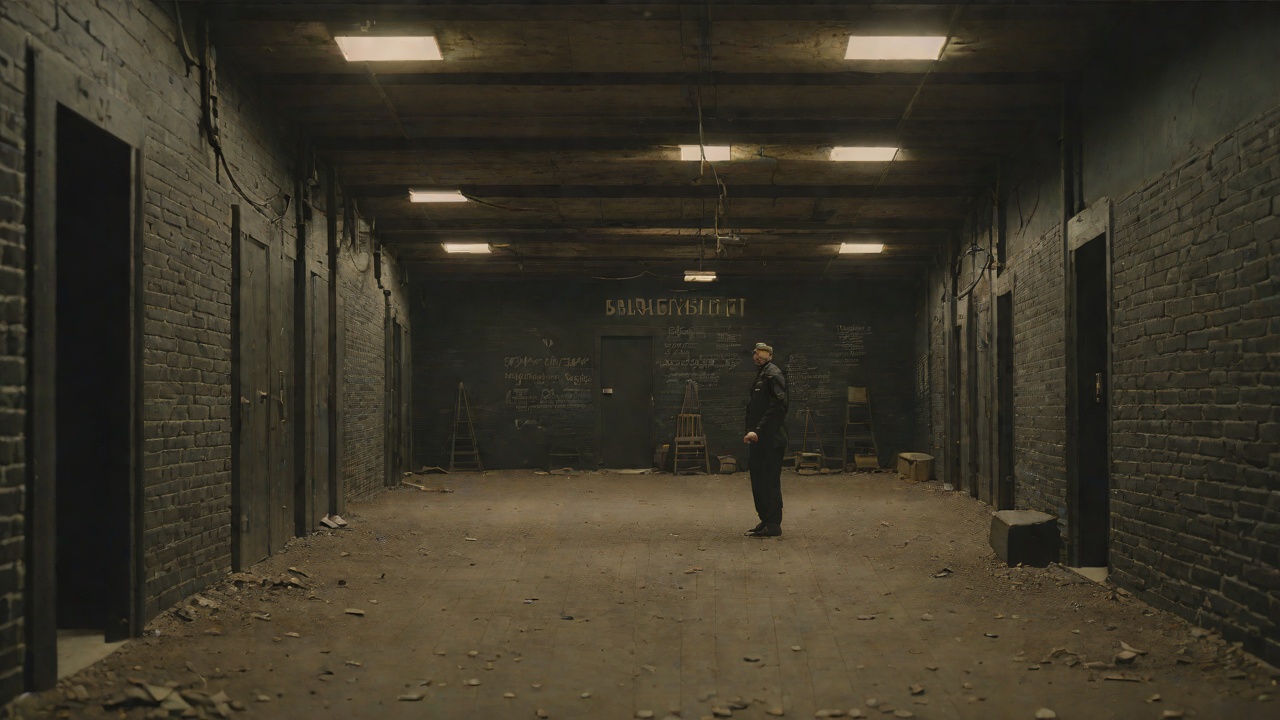
Appointed Block 11 Enforcer
Jakub has been made a guard in Block 11, the punishment block with the Black Wall. When Lale Sokolov is thrown into a cell there, Jakub recognizes him.
A Horrified Greeting
Jakub enters the cell with a bowl of broth and tells Lale what he has become. He says, 'I am to beat you until you give me names.'
The Hammer and the Anvil
Jakub's duty is to torture prisoners for the SS. His size has made him the perfect tool of the camp's violence.
The Beating That Saved Lale
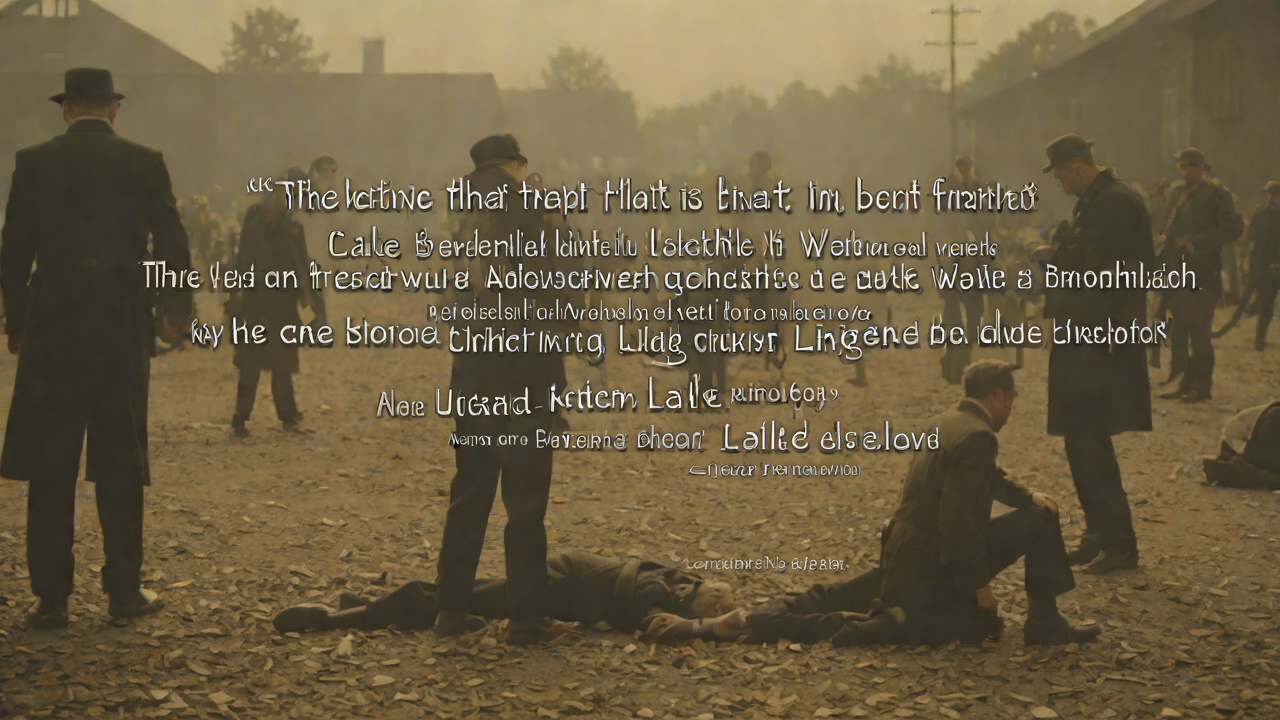
The Beating That Saved Lale
Jakub beats Lale Sokolov until the blood runs, but he whispers in Yiddish to say he doesn't know the names and then to faint. The performance convinces the watching SS.
A Killer's Mercy
Jakub tells Lale he will kill him before allowing him to name a single innocent prisoner. The beating is brutal, but it is also a protection.
The Scars of a Friend
Lale wakes with a broken nose and stripes across his back. Jakub's kindness and cruelty have become inseparable, just like the camp itself.
Afterward and Unknown
Afterward and Unknown
Jakub brings Lale Sokolov water and clean shirts for several days, reporting on the healing of his wounds. When the SS take Lale to Birkenau, the two men do not meet again.
The Debt Repaid
Jakub's kindness to Lale was a repayment for the bread and sausage given in the dark. The story does not reveal whether Jakub survived the war.
The Weight of the Tool
Jakub remains a mystery of the camp system: a man powerful enough to kill and gentle enough to save one person. His fate is one of the war's open questions.
late 1942, during a night transport
a few Sundays later, in the Birkenau compound
by 1944, when Lale is dragged to the punishment block
June 16 to July 10, 1944, inside Block 11
after Lale is released, 1944–1945
